The Paradigm Shift
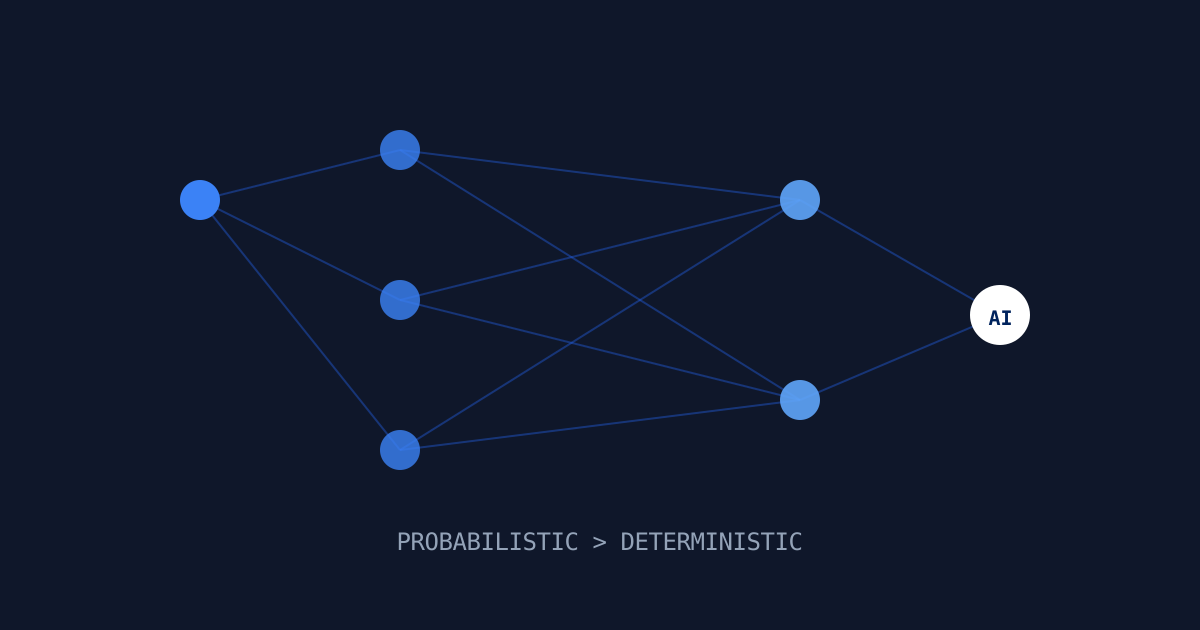
For decades, computer science has been deterministic. Input A + Function B always equals Output C. If it doesn't, it's a bug.
Artificial Intelligence (LLMs) introduces probabilistic computing. Input A + Model B equals Output C... most of the time. Sometimes it equals Output D. This isn't a bug; it's a feature of creativity and flexibility. But it requires a new way of thinking.
🤖 The Hallucination Problem
In deterministic systems, errors are crashes. In probabilistic systems, errors are plausible falsehoods (hallucinations). Your architecture must handle this.
Architecting for AI
How do we build reliable systems on unreliable components?
| Deterministic Concept | Probabilistic Equivalent |
|---|---|
| Unit Tests | Evals (Evaluation Datasets) |
| Strict Types | Prompt Engineering & JSON Mode |
| Caching (Key-Value) | Semantic Caching (Vector Similarity) |
| Database Search | RAG (Retrieval Augmented Generation) |
The Temperature Parameter
Control the chaos. The temperature setting (0.0 to 1.0) controls randomness.
- Temp 0.0: Data extraction, code generation, factual Q&A. (More deterministic)
- Temp 0.7+: Creative writing, brainstorming, poetry. (More creative/random)
Human in the Loop: For critical workflows, never let the AI have the final say. Design your UI to allow users to review, edit, and approve AI-generated actions.
Conclusion
"Thinking in AI" means embracing uncertainty. It means building guardrails, verification steps, and feedback loops. It's not just calling an API; it's managing a conversation.